
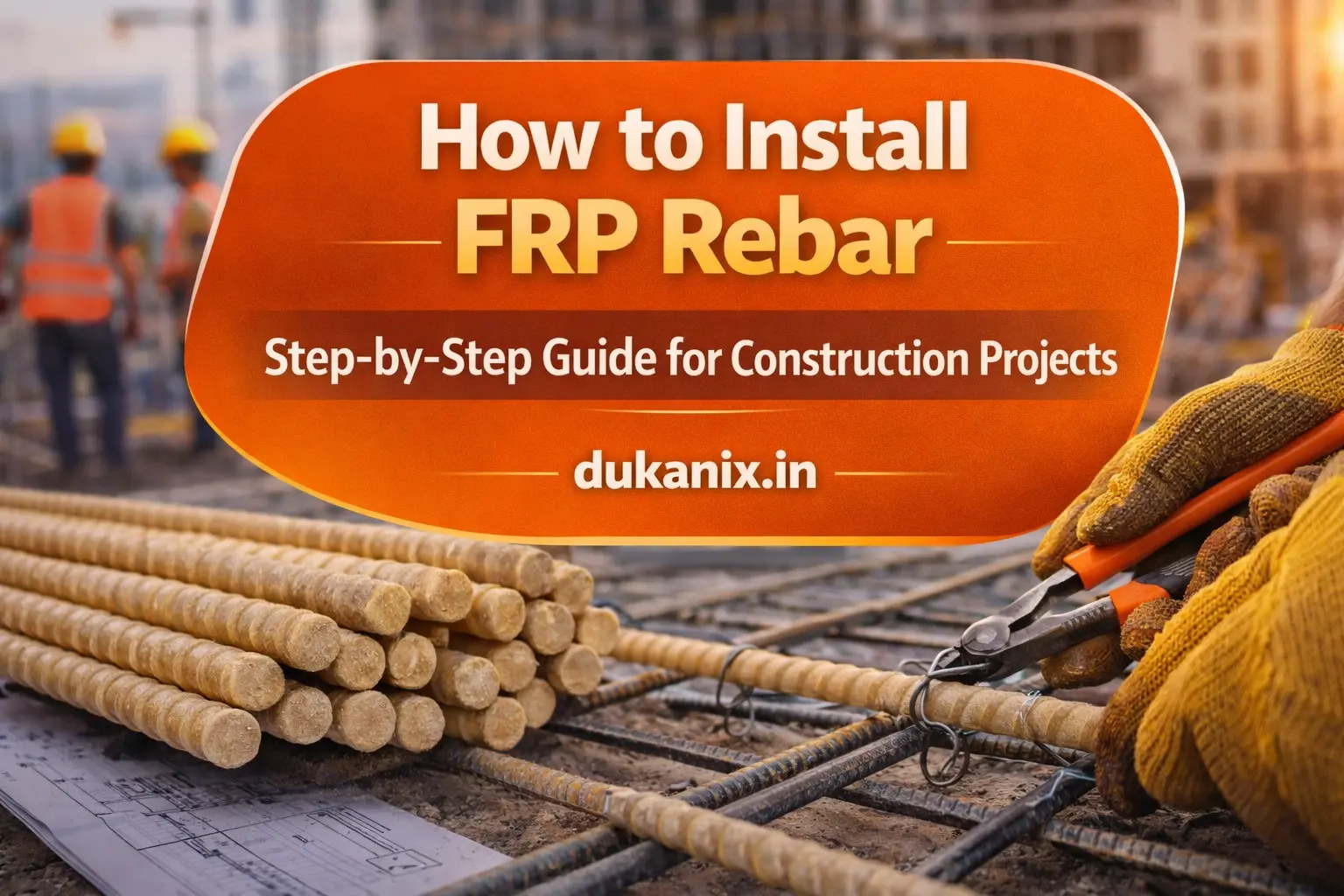
How to Install FRP Rebar in Concrete Structures
FRP rebar installation follows a similar process to steel rebar placement but requires specific handling practices due to differences in material properties. GFRP bars are lighter, cannot be bent on site after manufacturing, and require non-metallic tie wire or plastic clips for assembly. Following the correct installation procedure ensures the reinforcement performs as designed throughout the structure's service life.
This guide covers the complete process — from cutting and handling on site to tying, placing, and concreting over GFRP bars.
Sourcing GFRP Rebar for an MP Project?
Dukanix is based in Dhar, MP - your closest wholesale GFRP supplier. Get bulk pricing for your city within 24 hours.
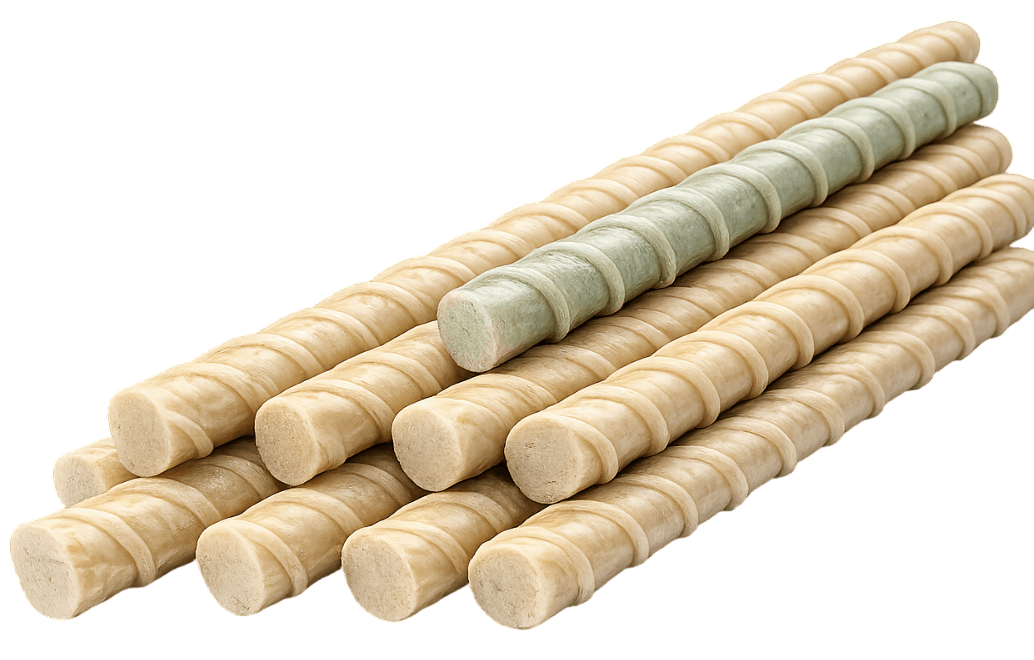
Tools and Materials Required
Before installation, ensure the following are available on site:
- Angle grinder or diamond blade saw — for cutting GFRP bars to length
- Plastic or fibreglass tie wire — metallic tie wire must not be used as it corrodes and can stain concrete
- Plastic bar chairs and spacers — to maintain cover depth; metal chairs are not recommended
- Measuring tape and chalk line — for marking bar positions per structural drawing
- Safety gloves and eye protection — GFRP cutting produces fine glass fibre dust
Step 1 — Check Bar Specifications Against Structural Drawing
Before cutting any bars, confirm the following from the structural engineer's drawing:
- Bar diameter specified (6mm, 8mm, 10mm, 12mm, 16mm, or 20mm)
- Bar spacing in both directions
- Required concrete cover depth
- Lap splice lengths — GFRP lap lengths differ from steel and will be specified separately
- Any special bends or hooks — these must be factory-produced, not site-bent
GFRP bars cannot be bent on site. If a bent bar is required — for hooks, stirrups, or cranked bars — it must be ordered pre-bent from the manufacturer. Attempting to bend GFRP bars on site will damage the fibres and compromise structural performance.
Step 2 — Cut Bars to Required Length
Use an angle grinder with a diamond or abrasive blade, or a circular saw with a diamond blade, to cut GFRP bars to the lengths specified on the drawing. A standard hacksaw can be used for smaller diameters but is slower.
Always cut in a well-ventilated area and wear a dust mask and eye protection. GFRP cutting generates fine glass fibre particles that are an irritant if inhaled or if they contact eyes or skin. Wear long sleeves and gloves when handling cut bars.
After cutting, lightly sand or file the cut end to remove any sharp fibre protrusions before handling.
Step 3 — Place Bar Chairs and Spacers
Place plastic bar chairs on the formwork or blinding concrete at the spacing required to achieve the specified concrete cover. Cover depth for GFRP bars is typically specified at 20–40mm depending on the exposure class and structural element — confirm from the project specification.
Use only plastic or fibreglass bar chairs. Metal chairs can create a corrosion path to the reinforcement and defeat the purpose of using non-metallic GFRP bars.
Step 4 — Place and Tie the Bottom Layer
Place the first layer of bars on the chairs at the spacing marked on the formwork. Tie intersections using plastic tie wire or plastic clips. Do not use standard galvanised or black steel tie wire — it will corrode and can cause surface staining on the finished concrete.
At lap splice locations, overlap bars by the length specified on the structural drawing. GFRP lap lengths are typically longer than equivalent steel laps due to the different bond characteristics of the material — this will be explicitly noted in the structural specification.
Step 5 — Place the Top Layer and Maintain Spacing
Place the second layer of bars perpendicular to the first, on top of the tied bottom layer. Use plastic spacers or bar chairs between layers where the structural drawing specifies a gap between reinforcement layers.
Tie all intersections and check that bar spacing matches the structural drawing before proceeding. Once concrete is poured, corrections cannot be made.
Step 6 — Check Cover and Position Before Concreting
Before ordering concrete, carry out a final check:
- Bar diameters match specification
- Bar spacing matches drawing in both directions
- Cover depth is maintained by chairs — bars are not resting directly on formwork
- All laps are at correct length
- No metallic items (tie wire, chairs, tools) are left within the cover zone
- Pre-bent bars are correctly positioned at edges and corners
Step 7 — Concreting Over GFRP Bars
GFRP bars are compatible with standard Portland cement concrete mixes. No special mix design is required for most applications. Pour and vibrate concrete as per standard practice — GFRP bars are unaffected by internal vibration when the vibrator is not placed in direct contact with the bars.
Do not use external form vibrators directly against formwork adjacent to GFRP bars without confirming with the structural engineer, as vibration frequency can affect bar position in thin sections.
Common Installation Mistakes to Avoid
- Bending bars on site — always order pre-bent bars from the manufacturer
- Using steel tie wire — replace with plastic tie wire or clips throughout
- Incorrect lap lengths — GFRP laps are longer than steel; use the project-specific specification
- Metal bar chairs — replace all metallic supports with plastic equivalents
- Cutting without PPE — always use gloves, eye protection, and dust mask when cutting
Conclusion
FRP rebar installation is straightforward when the key differences from steel are understood — no site bending, plastic tying accessories only, and longer lap lengths. Following the structural specification carefully and using the correct tools ensures GFRP bars perform as designed and deliver their full corrosion-free service life benefit.
Explore our range of FRP Construction Bars available in diameters from 6mm to 20mm for civil, industrial, and infrastructure projects.
Frequently Asked Questions
Quick answers related to this article.
Sourcing GFRP Rebar for an MP Project?
Dukanix is based in Dhar, MP - your closest wholesale GFRP supplier. Get bulk pricing for your city within 24 hours.
Related Blogs
How to Protect Crops from Nilgai Using Solar Fencing | FRP Rod Farm Fencing
03 Apr 2026
Read Article
FRP Rebar Lifespan and Durability: How Long Does GFRP Rebar Last?
19 Mar 2026
Read Article
FRP Rebar for Industrial Construction: GFRP Bars for Factories, Warehouses and Plants
18 Mar 2026
Read Article