
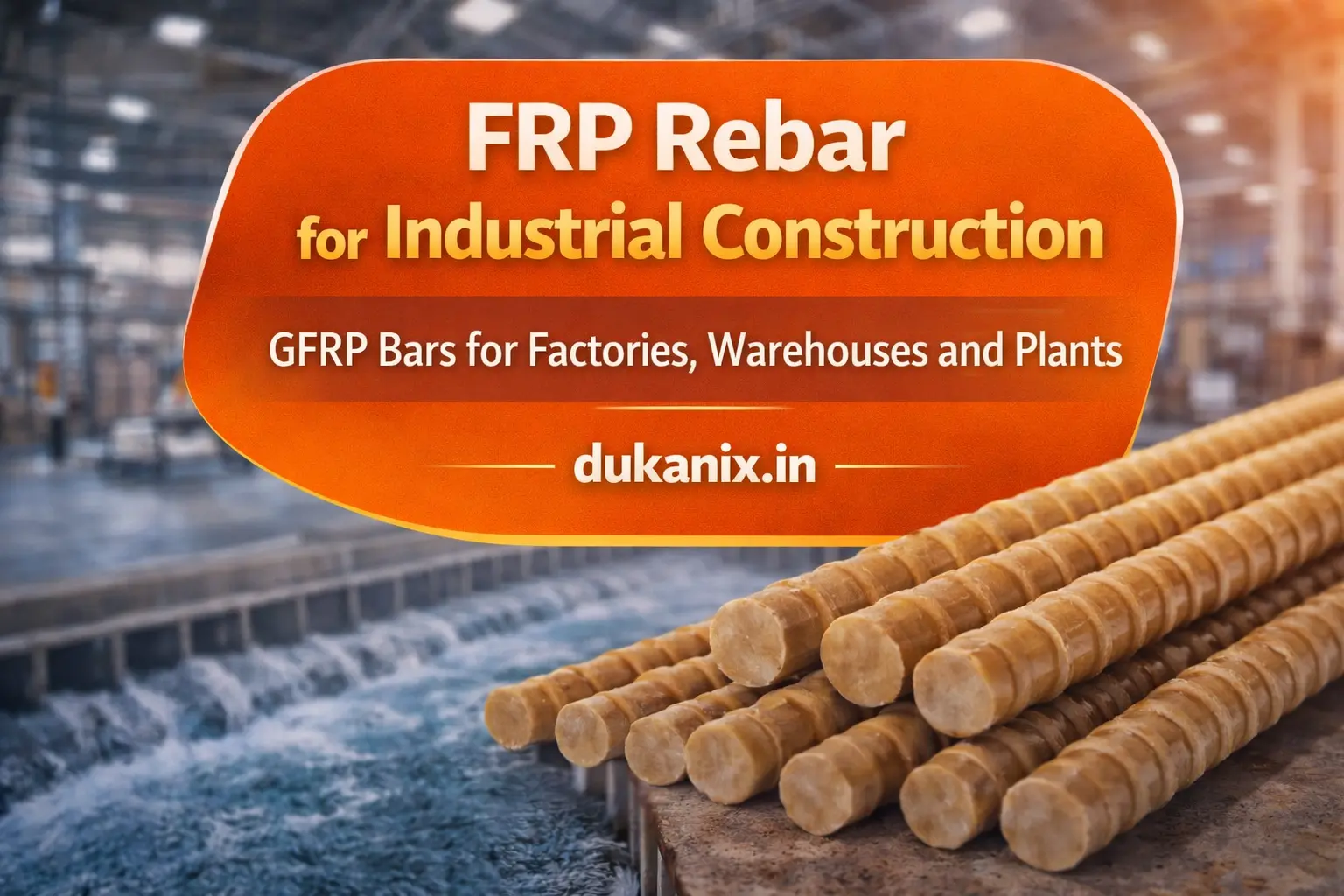
Why Industrial Construction Uses GFRP Rebar
Industrial buildings — factories, warehouses, processing plants, and logistics facilities — create reinforcement environments that differ significantly from standard residential or commercial construction. Floor slabs face heavy vehicle loads, chemical spills, and cleaning agents. Structures in processing zones are exposed to process fluids, steam, and industrial chemicals. Utility infrastructure is in permanent contact with water and drainage.
In these conditions, conventional steel rebar begins to corrode from within the slab — expanding as it rusts, cracking the concrete surface, and creating a maintenance liability that grows over the facility's operating life. GFRP (Glass Fiber Reinforced Polymer) rebar eliminates this mechanism. It is used in industrial construction where long floor life, reduced maintenance, and resistance to chemical and moisture environments are procurement priorities.
Sourcing GFRP Rebar for an MP Project?
Dukanix is based in Dhar, MP - your closest wholesale GFRP supplier. Get bulk pricing for your city within 24 hours.
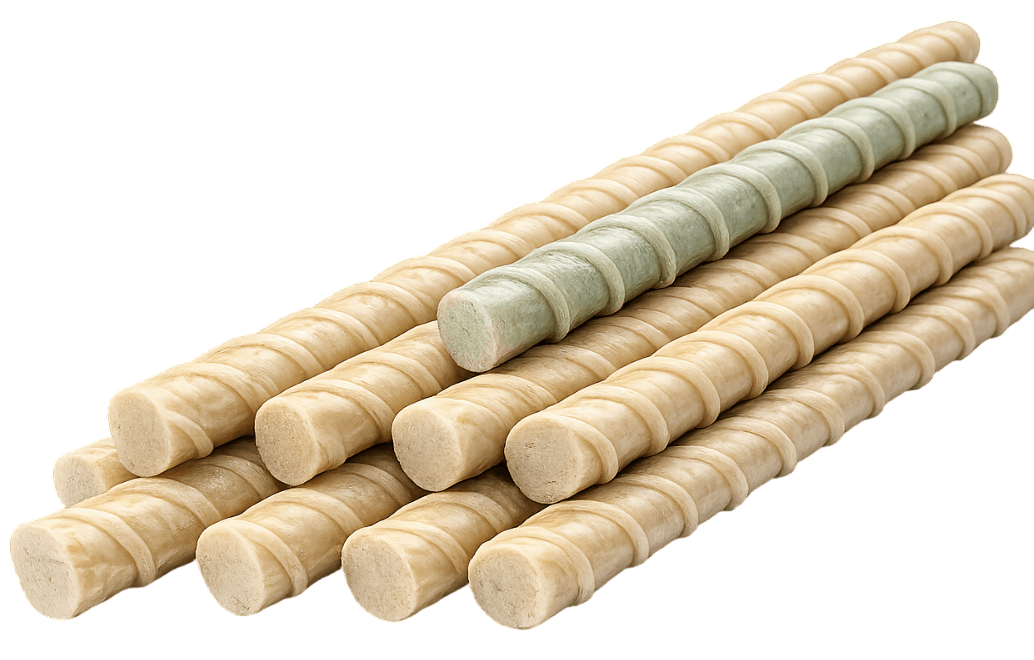
Industrial Environments Where GFRP Outperforms Steel
Manufacturing facility floors
Factory floors in manufacturing plants — particularly in chemical, pharmaceutical, food processing, and auto-ancillary sectors — involve regular contact between the floor slab and process fluids, cleaning chemicals, and moisture. Steel rebar in these floors corrodes progressively from the slab surface inward. GFRP reinforcement does not corrode regardless of chemical or moisture contact, extending the usable life of the floor slab significantly.
Warehouse and logistics floor slabs
Large-format warehouse floors are subjected to sustained heavy forklift and vehicle traffic combined with seasonal humidity exposure. Corrosion-driven slab cracking in steel-reinforced warehouse floors creates surface defects that affect forklift operations and require costly repair. GFRP bars provide structural reinforcement without the corrosion risk, delivering a more durable slab surface over the facility's operational life.
Effluent and drainage infrastructure
Effluent channels, drainage sumps, chemical containment bunds, and wash-down drainage infrastructure within industrial facilities involve some of the most aggressive reinforcement environments in construction. Vinyl ester GFRP bars are specified for these applications because of their resistance to the acids, solvents, and alkalis present in industrial effluent and process drainage.
Chemical storage and containment structures
Secondary containment bunds, chemical storage tank surrounds, and spill containment structures must retain structural integrity in the event of chemical contact. GFRP reinforcement provides a non-reactive, corrosion-free structural element in these critical containment structures.
Cold storage and refrigerated facilities
Cold storage facilities involve sustained low temperatures and high humidity from condensation. These conditions accelerate steel corrosion in floors and walls. GFRP bars are unaffected by low temperature and humidity cycling, making them a suitable reinforcement choice for refrigerated construction.
Practical Advantages on Industrial Construction Sites
Lighter material on large-format sites
Industrial buildings involve large floor plate areas with high reinforcement volumes. GFRP bars weigh approximately 25% of the equivalent steel rebar by weight. On large warehouse and factory floor pours, this reduces the labour cost of moving, placing, and tying reinforcement — improving placement speed and reducing physical demand on site crews.
Non-conductive for electrical and utility environments
Industrial facilities with embedded electrical infrastructure, earthing systems, or proximity to high-voltage equipment benefit from GFRP's electrical non-conductivity. GFRP reinforcement eliminates the risk of unintended electrical paths through the reinforcement and satisfies electrical neutrality requirements in sensitive industrial environments.
Non-magnetic for precision manufacturing
Facilities housing MRI equipment, precision measurement instruments, or electromagnetic-sensitive manufacturing processes require non-magnetic structural materials. GFRP bars are non-magnetic and are used in the construction of hospitals, research facilities, and precision manufacturing plants where magnetic interference from steel reinforcement would compromise operations.
Specifying GFRP for Industrial Construction
Floor slab applications
For standard industrial warehouse and factory floors without aggressive chemical exposure, polyester resin GFRP bars in 10mm to 16mm diameters are appropriate for primary reinforcement. Bar spacing and slab thickness are determined by the structural engineer based on anticipated floor loading.
Chemical exposure applications
For floors, bunds, channels, and structures with direct chemical contact, specify vinyl ester resin GFRP bars. The vinyl ester resin matrix provides significantly higher chemical resistance than polyester and is the correct specification for aggressive industrial environments.
Heavy-duty floor loading
For industrial floors subject to very heavy point loads — rack foundations, heavy machinery bases, or dock leveller areas — confirm the reinforcement specification with a structural engineer. GFRP has different stiffness characteristics to steel and the structural design must account for this correctly.
Conclusion
GFRP rebar is a practical reinforcement choice for industrial construction where chemical exposure, moisture, heavy floor loading, or long maintenance-free service life are project requirements. Its corrosion resistance, lightweight handling advantage, and non-conductive properties address the specific challenges of industrial reinforcement environments that conventional steel is poorly suited to.
Explore our FRP Construction Bars for industrial applications, or contact our team for bulk pricing and specification guidance.
Frequently Asked Questions
Quick answers related to this article.
Sourcing GFRP Rebar for an MP Project?
Dukanix is based in Dhar, MP - your closest wholesale GFRP supplier. Get bulk pricing for your city within 24 hours.
Related Blogs
How to Protect Crops from Nilgai Using Solar Fencing | FRP Rod Farm Fencing
03 Apr 2026
Read Article
How to Install FRP Rebar: Step-by-Step Guide for Construction Projects
21 Mar 2026
Read Article
FRP Rebar Lifespan and Durability: How Long Does GFRP Rebar Last?
19 Mar 2026
Read Article